33 Scandinavian Living Room Decorating Ideas That Actually Work
Disclosure : This post may contain affiliate links or paid partnerships. I may earn compensation if you click a link or make a purchase, at no additional cost to you. See my disclosure for more info.
Most Scandinavian living room guides give you beautiful photos and zero guidance.
That’s not what this is.
This is a working list of 33 specific moves you can make — furniture decisions, color choices, lighting setups, and styling habits — that will build a Nordic living room from the ground up.
No vague inspiration. No guesswork. Just clear steps you can take starting today.
Choosing the Right Furniture
Every furniture choice you make either supports the Scandinavian aesthetic or fights it. Here’s what supports it.
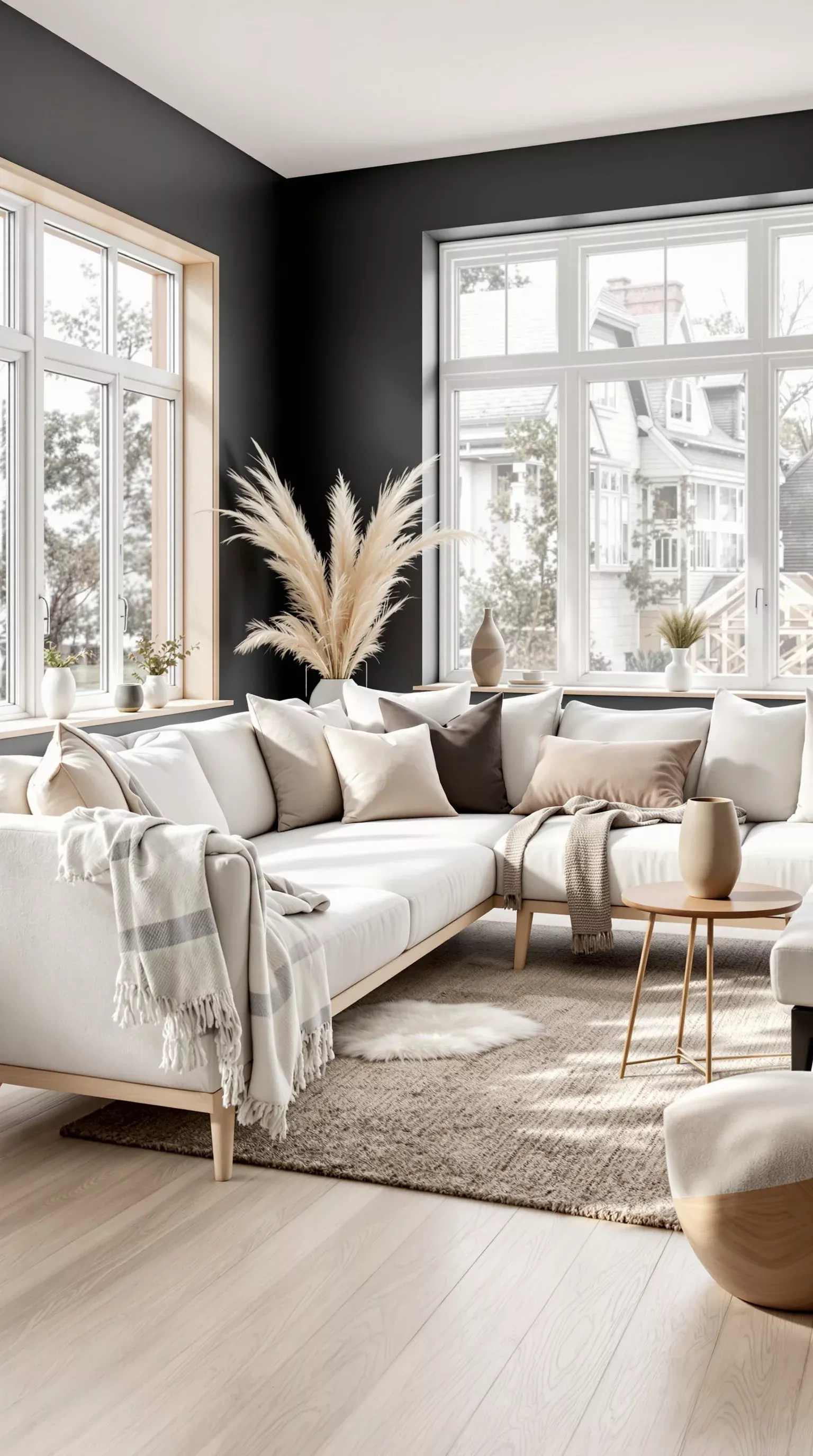
1. Source a low sofa in natural fabric with clean proportions.
The silhouette should be long and horizontal, with tapered wooden legs and slipcovers you can actually wash. No tufting, no curved arms, no synthetic upholstery. Simplicity is the specification.
2. Pick a solid hardwood coffee table with visible natural grain.
Walnut, oak, or ash. Soft rounded edges. Left with a light oil finish rather than a heavy lacquer. The grain, the color variation, the slight imperfections — that’s exactly what you’re after.
3. Select a single quality accent chair and resist the impulse to pair it.
A solo chair in boucé or textured wool with mid-century legs creates a focal point. A matching pair creates a showroom floor. Resist the pair.
4. Replace your bookcase with open-frame wall shelving.
Mounted in pale wood or slim metal. Display three to five items per shelf, maximum. The visible wall behind the objects is part of the aesthetic — don’t block it.
5. Mount a floating media console at the correct viewing height.
Light wood tone, minimal cable holes visible, wall-mounted. Floor space freed. Room opened. It’s that simple an upgrade.
6. Apply the double-duty rule to every purchase.
A storage bench at the foot of the sofa. A wooden stool beside the armchair. If a piece only does one thing, it may not be worth the floor space.
Setting the Color Scheme
The right Nordic palette feels harmonious and warm. The wrong one feels cold and sterile. Here’s how to land on the right side.
7. Start your palette with warm-based whites.
Test your whites against natural light. You want cream, linen, and soft off-white with yellow or pink undertones — never blue-white, never stark white. The undertone determines everything.
8. Use greige as your secondary neutral.
Gray-beige on a feature wall or a sofa. It sits between gray and beige in a way that reads as both sophisticated and relaxed. Visual weight without visual heaviness.
9. Limit accent colors to soft earth tones.
Dusty rose. Sage. Warm clay. Keep them quiet and keep them few. These colors animate the room without interrupting the calm.
10. Use black as a grounding detail, not a color story.
A matte black lamp base, a thin-framed mirror, a dark accent cushion. Three instances of black is a design decision. More than that becomes a different room entirely.
11. Add material contrast when the palette feels flat.
Don’t reach for a bolder color. Reach for a different texture. Rough wood. Chunky linen. Woven natural fiber. The contrast you need is tactile, not chromatic.
Incorporating Natural Elements
A Scandinavian room without nature is like a Nordic kitchen without rye bread — technically possible, but missing the point entirely.
12. Install one large-scale plant as a true design element.
Fiddle leaf fig. Monstera. Snake plant. Position it in a corner or by the window where it can reach full height. House it in a seagrass basket planter. One significant plant contributes more than a collection of small ones.
13. Add dried eucalyptus stems in a tall ceramic vase.
Months of longevity, subtle fragrance, and an aesthetic that signals care without effort. One of the best styling moves in this entire list.
14. Bring in objects with natural origin and personal meaning.
A polished stone. A piece of driftwood. A carved wooden bowl. Objects from the natural world ground a space in a way that manufactured goods simply cannot.
15. Organize coffee table items inside a round wooden tray.
Candle, small plant, one book. The tray contains the group visually and turns scatter into intention with zero effort.
Creating Effective Lighting Layers
The Nordic approach to lighting is deliberate and layered. Here’s how to replicate it.
16. Install a pendant with organic shape above the main seating area.
Rattan, frosted glass, or paper. This is the room’s primary statement fixture — it sets the entire emotional register. Choose deliberately.
17. Add at least two more light sources beyond the pendant.
A floor lamp in a corner. A table lamp on a side surface. Nordic rooms don’t rely on a single overhead source — warmth comes from all directions.
18. Build a candle ritual into your evenings.
Grouped on a tray, lit at the same time each evening. The habit matters as much as the candles. This is hygge as a daily practice, not a styling choice.
19. Protect daylight as a primary asset.
Remove or dramatically reduce window coverings. At most, hang the lightest possible sheer linen panels. Light flooding the floor and walls is more effective than any artificial source you can buy.
Handling Walls and Artwork
Wall decisions are permanent-ish. Make them carefully.
20. Commission or buy one large-format artwork rather than assembling a gallery.
Scale matters. One 100cm print does more for the room than five smaller pieces. It focuses the eye and defines the wall rather than decorating it.
21. Apply limewash to one wall for natural texture.
A single accent wall in limewash or microcement introduces depth and movement. The effect is subtle by day and beautiful by lamplight.
22. Install slim picture ledges for flexible art display.
Two ledges, prints leaned against the wall. Rotate seasonally or whenever you feel like a change. No drilling, no commitment, total flexibility.
Styling with Precision
The details are what separate rooms that almost work from rooms that completely do.
23. Begin with hardware and light fittings — they’re the fastest upgrade.
Replace drawer pulls and handles in brushed brass or matte black. Swap out an outdated ceiling fixture. Thirty minutes of work, room-changing results.
24. Select coffee table books for visual impact, not reading frequency.
Two or three with strong cover design. Stacked or laid flat depending on height. Architecture, design, travel — the subject should interest you, the cover should interest everyone.
25. Find a simple round wall clock in wood or matte black.
Clear face. Clean numbers. Sized correctly for the wall. A clock that fits a Nordic room looks like it grew there.
26. If there’s a fireplace, make the logs part of the design.
A matte black metal log rack loaded with birch. Even decoratively, stacked wood communicates warmth, craft, and preparedness.
27. Set up a reading nook with four elements, maximum.
Chair. Lamp. Sheepskin throw. Books. That’s the complete specification. A Nordic reading nook doesn’t need anything else.
28. Operate on a strict one-in-one-out basis.
For every new decorative object, one existing object leaves. This isn’t minimalism — it’s maintenance of the breathing space that makes the room work.
29. Scent the room with natural diffusers or soy candles.
Cedar, pine, bergamot. Scent is the design element no photograph captures — and the one that makes a space feel complete in a way nothing visual can.
Layering Textiles Correctly
Textiles determine how a room feels, not just how it looks. Layer them correctly and the room becomes genuinely comfortable.
30. Position a chunky knit throw on the sofa — without straightening it.
Draped casually over one arm or bunched at one end. The informality signals habitation, not display. Visitors sit down faster in rooms that look lived in.
31. Layer a sheepskin or faux fur blanket over the accent chair.
Let it fall from the back of the seat. Don’t try to style it — gravity does a better job. The chair will immediately become the seat everyone wants.
32. Dress sofa cushions in linen covers in a cohesive palette.
Four to five cushions maximum. Linen improves with washing. It wrinkles in a way that looks intentional. And it breathes — which synthetic alternatives simply don’t.
33. Ground the seating area with a large flat-weave rug in a natural fiber.
Jute, wool, or cotton. Neutral color. Sized so that all front sofa legs sit on top. A rug that’s too small makes the room feel unanchored — bigger is almost always right.
The One Rule That Protects Everything Else
You could execute every step above and still end up disappointed.
How? By trying to do it all in a single weekend.
Scandinavian interiors are built on restraint. The aesthetic is actually a discipline — the discipline of adding little and editing often.
Take five ideas from this list. Implement them. Live with the result. Then assess.
The rooms that appear most effortless were made by people who had the patience to stop.
Your Starting Point Is Here
You have thirty-three clear ideas in front of you.
The budget and the designer are both optional. The starting point is not.
Choose one idea. Make that change today. Note how the room responds.
Apply the next idea tomorrow. And the one after that the day following.
That’s the whole system. And at the end of it, you’ll have the Nordic living room that felt unreachable — calm, warm, and built entirely by your own decisions.