27 Effortless Side Table Ideas for a Living Room That Looks Professionally Styled
Disclosure : This post may contain affiliate links or paid partnerships. I may earn compensation if you click a link or make a purchase, at no additional cost to you. See my disclosure for more info.
What if looking like you tried didn’t require actually trying that hard?
That’s the real secret of a well-styled side table. The results look deliberate and considered. The effort behind them is often surprisingly small.
The problem is that most people approach their side table one of two ways: they ignore it completely, or they over-complicate it until the arrangement looks busy and stressful instead of calm and intentional.
Neither works.
What works is knowing the shortcuts — the moves that produce big visual results with minimal effort or expense.
These 27 ideas are those shortcuts. Each one is practical, approachable, and immediately actionable. Most require no shopping at all.
Let’s make your side table look great without making it a project.
Start Here (It Takes Two Minutes)
1. Take everything off and start completely fresh.
Two minutes. That’s all this takes.
Remove every object from the surface, wipe it down, and resist the temptation to immediately put things back. That blank surface is the beginning of every well-styled side table. You can’t arrange on top of clutter — but you absolutely can rearrange a clean slate.
2. Group three things together and stop there.
The simplest version of good side table styling is this: choose three things of different heights and put them together.
A lamp, something small and decorative, something that brings a bit of life. That’s it. You don’t need five things or eight things. Three well-chosen objects at varied heights look better than a dozen things competing for space.
3. Use height variation to make everything look more dynamic.
Same-height objects on a side table look like they were placed without thinking. That’s because they usually were.
Fix it without buying anything: stack two or three books on the surface and rest a small object on top. Tall, medium, low. Done. The result immediately looks more considered, more designed, more you-meant-to-do-that.
4. Pick one piece you love and build around it.
Decision fatigue is real. Here’s how to eliminate it for your side table.
Choose one object you genuinely love — a sculptural vase, a bold lamp, a striking clock — and make every other decision based on what supports it. When you lead with something you already love, every other choice becomes easier.
The One Lighting Change That Does Everything
5. Swap overhead lighting for a table lamp, even just for evenings.
This is the single highest-return change you can make to your living room, and it costs nothing if you already own a lamp.
A warm table lamp on your side table turns on in the evening and the whole room changes. More intimate. More inviting. More finished-looking. Overhead lighting makes a room look like a waiting room. Lamp lighting makes it look like a home.
6. Go cordless and remove the most annoying styling obstacle.
Cords ruin everything. They’re the one element that makes a beautifully styled side table look immediately less beautiful.
A cordless LED lamp removes the problem entirely. It sits wherever you want it, moves when you want to move it, and casts beautiful warm light without requiring an outlet nearby. One purchase, many problems solved.
7. Add a candle to double the warmth with minimal effort.
A candle next to a lamp is one of the easiest upgrades you can make to your side table.
Together, lamp and candle create the kind of layered, warm light that makes everyone who sits in the room feel slightly more relaxed. It costs a few dollars, takes two seconds to position, and the effect is immediate and noticeable.
Stack It and Stack It Good
8. Use books to raise smaller objects to the right height.
This trick is free if you own books, which you probably do.
Stack two or three on your side table and set a candle, small plant, or decorative object on top. The books create height and visual layering simultaneously. They also add their own decorative quality through their covers and color. Effortless and genuinely effective.
9. Match book colors to your room’s tones (or just turn them around).
Here’s the lazy version of the book-spine color trick: turn them around.
If you don’t want to think about which spines complement your color palette, just face the pages outward instead. It creates a clean, uniform look that works with any room. Zero thought required. Still looks intentional.
10. Put a small tray under everything and watch it instantly look pulled together.
A tray is the biggest shortcut in home styling. No exceptions.
A candle, a small plant, a pretty dish — individually these are just three objects. Inside a tray, they become a curated arrangement. One purchase transforms random into intentional. It’s genuinely the fastest upgrade available for any surface in your home.
Nature Does Half the Work for You
11. Put literally any living plant on your side table.
You do not need to overthink the plant situation.
A small potted plant in a small pot. One stem in a bud vase. A tiny succulent that practically waters itself. Anything living will improve your side table arrangement because organic form and real color are things no manufactured object can replicate. A pothos cutting in a water glass is as effective as anything expensive.
12. Can’t keep plants alive? Dried botanicals have zero requirements.
Dried eucalyptus and pampas grass exist for exactly this reason.
They look great. They last for months. They need absolutely nothing from you. Tuck a few stems into a narrow vase and you have instant organic texture with zero maintenance. The only thing to avoid is anything that looks like it has been there since 2004.
13. A single piece of driftwood costs nothing and looks like you hired a stylist.
Find a smooth piece of driftwood on any beach, or pick up a sculptural branch from your garden. That’s it.
Placed with a little confidence on your side table, it adds a natural, gallery-quality texture that no purchased object can quite match. It’s free, it’s distinctive, and it always gets noticed.
Mix It Up Without Overthinking It
14. Use two different materials and the rest takes care of itself.
You don’t need a design degree to know which materials go together. Just pick two that are different.
A ceramic vase next to a brass candle holder. Glass beside a woven basket. The contrast between different surfaces — smooth and rough, cool and warm — creates visual richness automatically. Two different materials almost always look better than six of the same one.
15. Add one soft thing to your hard surface arrangement.
This is the move that makes a side table feel warm rather than cold.
A woven coaster under a vase. A folded linen cloth. A macramé plant hanger draped off the edge. Any single textile element softens the whole arrangement in a way that nothing else does. It takes thirty seconds to add and changes the feel of the entire surface.
16. One metallic piece. Just one.
Gold, brass, copper — pick one and add it once.
A brass picture frame, a small brass bowl, a copper object of any kind. That single reflective surface catches light and lifts the arrangement without any additional effort. More than one metallic piece and you’ve done too much. One is exactly right.
Make It Yours Without Shopping for Anything New
17. Feature one object you already own that means something to you.
Look around your home right now. There is almost certainly an object that has a story.
A stone from somewhere you loved. A small piece of pottery from a market. A vintage item that has been sitting in a drawer. Put it on your side table. That one personal object transforms a generic arrangement into something that actually reflects where you’ve been and who you are.
18. Lean any framed photo against the wall. No installation needed.
Easiest gallery effect in the world.
A 4×6 or 5×7 framed print resting against the wall behind your side table requires zero tools and looks effortlessly casual. The informal lean suggests someone who is comfortable in their own space. It takes five seconds, costs nothing if you already have a framed photo, and always looks intentional.
19. Use any pretty dish to contain the everyday items that land on your table.
Rings, keys, earbuds — they’re going to end up there. Design for it.
A beautiful small dish in marble or ceramic gives those inevitable items a dedicated home that looks deliberate rather than careless. You’re not fighting reality — you’re styling it. That’s good design with zero effort.
When in Doubt, Use Less
20. Leave at least a third of the surface completely empty.
More objects does not equal better styling. Often it equals the opposite.
Empty space on a side table is doing active work — it makes everything around it look more considered. Leave at least a third of the surface bare. If your table feels crowded, remove one item. The arrangement almost always improves.
21. Size your objects to the table you actually have.
Big vase on a small table looks wrong. Tiny objects on a large table look lost.
This one doesn’t require any design knowledge — just stand back and ask whether the objects look comfortable on the surface or like they’re struggling to fit. Adjust accordingly. Your instincts are usually right here.
22. Don’t let anything get taller than 1.5 times the lamp shade height.
This is the rule that prevents your arrangement from looking top-heavy without understanding why.
Keep your tallest item below this line and the whole composition will feel balanced and stable. Exceed it and something feels off even if you can’t name it.
These Last Touches Take Seconds
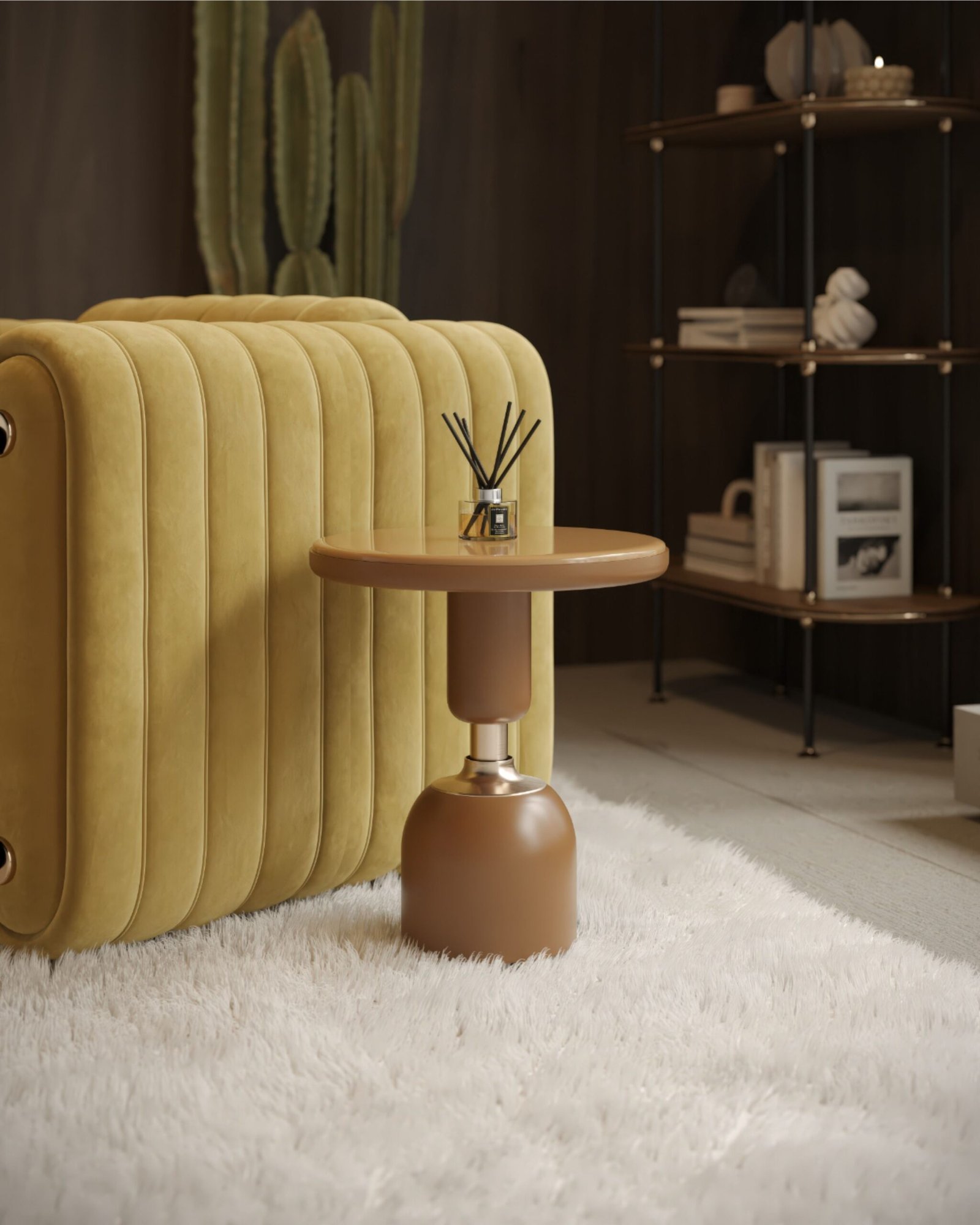
23. Add a scent to your table with a candle or diffuser.
Your side table can do more than look good — it can make the whole room smell good too.
A scented candle or a reed diffuser adds a sensory layer that contributes to how people feel in your space without them being able to identify why. It’s one of the easiest, most underused comfort upgrades available. Two seconds to position. Lasting impression.
24. Change one thing per season and keep the whole room feeling current.
You don’t have to restyle the whole table — just swap one object.
A candle in fall. A stem of something fresh in spring. A shell in summer. A small branch in winter. One item exchanged four times a year keeps your living room feeling alive and seasonally aware with almost no effort at all.
25. Raise one piece on a coaster or small stand to make it feel special.
Elevating one object — even just an inch — makes it read as the most important piece in the arrangement.
A marble coaster under a candle, a small wooden block under a favorite vase. This takes ten seconds and creates exactly the kind of intentional visual hierarchy that makes arrangements look professionally considered.
26. Take a fresh look at the table once a month.
A side table that looked great three months ago might look stale today. That’s normal. The solution is a quick monthly check.
What has stopped earning its place? What new thing deserves a turn? Spend five minutes on it once a month and your table never goes stale. Small, consistent maintenance beats occasional major overhauls every time.
27. Step back across the room and look at it from a real-world distance.
You styled it up close. Now see it the way your guests do.
Walk across the room and look. Does it hold together from ten feet away? Does it add to the room or distract from it? If yes, you’re done. If no, remove one thing. The fix is almost always subtraction, not addition.
Now Actually Do It
The only thing standing between your current side table and a much better one is about fifteen minutes of actual effort.
Pick three of these ideas — preferably ones that require no shopping at all — and try them tonight. Clear the surface, group three objects at different heights, add a candle, lean a frame against the wall.
You already own most of what you need. The rest is just deciding to use it intentionally.
The gap between a living room that looks assembled and one that looks effortlessly styled isn’t money or expertise. It’s knowing which small moves to make and actually making them.
Your side table is the easiest place to start. And once that corner looks good, the whole room feels better.
Give it fifteen minutes. You’ll see.
And the next time someone sits down in your living room and says “I love this room” — you’ll know exactly which effortless moves made it happen.