39 Blinds That Turn Ordinary Windows Into Showpieces
Disclosure : This post may contain affiliate links or paid partnerships. I may earn compensation if you click a link or make a purchase, at no additional cost to you. See my disclosure for more info.
Let’s be honest.
Your windows are letting you down.
Everything else in the room has gotten attention. The furniture placement, the color palette, the lighting. You’ve put in the work.
But the windows? Still bare, still boring, or still stuck with the same plastic blinds the landlord screwed in before you arrived.
The thought that keeps circling:
“I just want the place to look finished. But every custom option I’ve priced out would drain my account.”
Fair enough. Custom treatments are expensive. Nobody’s arguing that.
But here’s a secret the window industry doesn’t exactly advertise: the right off-the-shelf blind, installed correctly, looks indistinguishable from a custom job.
Material, fit, and finish. That’s what separates “nice try” from “who’s your designer?”
Thirty-nine options. Every one of them chosen because it delivers the look without the invoice.
Here we go.
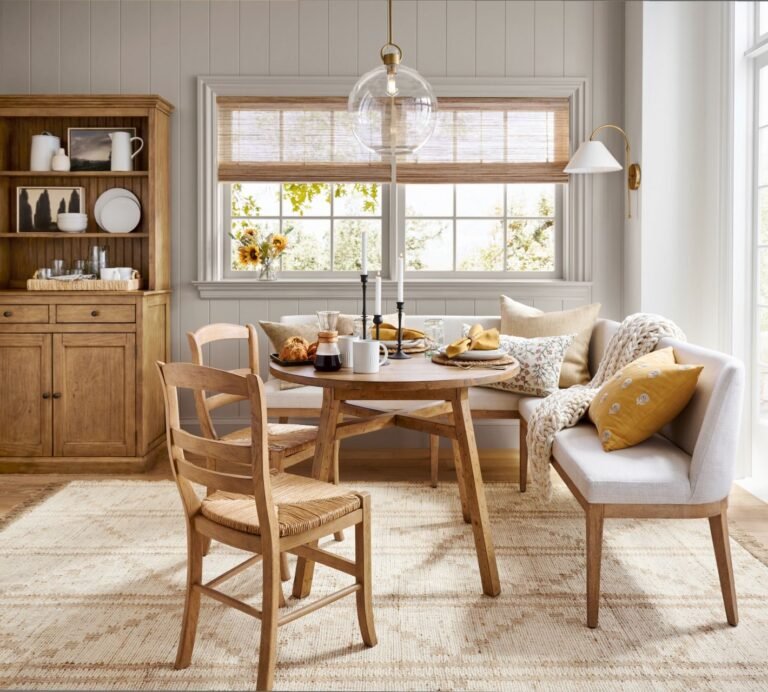
Woven Wood Shades — Nature’s Shortcut to a Luxury Feel
That warm, layered, effortlessly organic aesthetic you keep spotting in design magazines?
Woven wood shades. Every time.
Crafted from bamboo, reeds, jute, and natural grasses, they bring tactile richness that factory-made materials can’t replicate.
- Bamboo roll-up shades. Inexpensive, full of warmth, and delightfully imperfect. Daylight slips through in soft striped patterns.
- Woven wood Roman-fold shades. They pleat upward rather than rolling. Cleaner. More refined. More intentional.
- Woven wood shades with a built-in privacy backing. These are naturally see-through at night. Add the liner and you solve that problem entirely — without losing the texture.
- Tight-weave jute shades. Tighter weaves offer better light management and a more tailored look. Loose weaves feel casual. Choose accordingly.
- Wide-span woven wood shades for large windows. One continuous bamboo shade across a big window feels like a five-star resort lobby. Instant atmosphere.
The Minor Details That Create a Major Custom Effect
Custom-looking blinds aren’t about spending more.
They’re about choosing smarter on the small stuff.
- A matching valance to conceal the hardware. The headrail and brackets disappear. What’s left looks intentional and clean.
- Repeating one blind style throughout the house. Uniformity reads as design. Mixing styles room to room reads as indecision.
- Inside mounts wherever possible. The blind tucks into the window frame, showing off the trim. It looks like it was built with the house.
- Wider slats — 2-inch or 2.5-inch. They look more modern, more substantial, and produce fewer horizontal lines. Narrow slats date a room fast.
- Matte finishes instead of gloss. Matte catches light evenly. Gloss catches it harshly. One looks natural; the other looks plastic.
Cellular Shades — The Quiet Performer You’re Ignoring
Most shoppers skip right past these.
They shouldn’t.
Cellular shades (honeycomb shades) trap air in their hexagonal pockets. That insulates your room — cooler in summer, warmer in winter.
And visually? They’re impeccable.
- Single-cell light-filtering cellular shades. Paper-thin profile. Soft ambient glow. When raised, they nearly vanish.
- Double-cell cellular shades. Extra insulation, slightly thicker, but still beautifully minimal. Perfect for harsh climates.
- Top-down bottom-up cellular shades. Block the bottom, open the top. Private and bright at the same time.
- Cordless cellular shades in charcoal or slate. Dark shades on white trim. The contrast is sharp, modern, and unmistakably deliberate.
- Cellular shades with side-track light seals. No edge glow. No leakage. Complete blackout for bedrooms and nurseries.
Three Fitting Mistakes That Sabotage Any Blind
Why do so many blinds look bad once they’re installed?
It’s not the product. It’s the fit.
- Blinds measured too narrow. Light pours through the gaps on each side. The whole window looks unfinished.
- Blinds that fall short of the sill. That sliver of exposed window at the bottom undercuts every other design decision you’ve made.
- Wrong mount type for the window. Inside mount for sleekness, outside mount for coverage. Get this decision backward and even an expensive blind looks wrong.
These are fixable problems. Fix them before you buy anything.
Roman Shades — Where Function Meets Elegance
Roman shades carry the visual weight of a bespoke window treatment.
Flat folds. Clean lines. A flush, precise fit. They look expensive because they look intentional.
- Linen flat Roman shades. Understated, textured, and endlessly versatile. They complement almost any design style.
- Relaxed Roman shades with a soft droop. That casual curve at the base adds a laid-back, European quality. Great for informal spaces.
- Blackout Roman shades. Elegant on the surface, pitch-dark behind. Form and function, perfectly balanced.
- Top-down bottom-up cordless Roman shades. Choose where the light comes in. Top, bottom, or both. The neighbors see nothing.
- Patterned Roman shades. One bold print on one window can anchor an entire room’s design. Simple, powerful, memorable.
Budget-Friendly Blinds That Still Look Polished
Beautiful windows don’t demand a beautiful budget.
- Big-box faux wood blinds, trimmed to your exact width. Free in-store cutting turns a generic product into a precise fit. That precision changes everything.
- Matching roller shades purchased in multi-packs. Same shade for every window. Lower cost per unit. Consistent, cohesive, and intentionally styled.
- Adhesive paper pleated shades as a holding pattern. Moving in? Mid-renovation? These cost pennies, install in seconds, and let you choose permanent treatments without rushing.
Timeless Styles That Never Look Dated
Some blinds are trend-proof. They looked great a decade ago. They’ll look great a decade from now.
- White 2-inch faux wood blinds. The universal workhorse. They mimic plantation shutters and fit virtually any room.
- Cream 2.5-inch faux wood blinds. Wider slats, warmer tone, more contemporary silhouette. No sterile office vibes.
- Real basswood blinds. Authentic grain, real heft, unmistakable character. Worth every penny in your most visible rooms.
- Espresso or walnut-stained wood blinds. They connect the window to the rest of the room’s woodwork. The room feels complete.
- Cordless faux wood blinds. No strings attached — literally. Cleaner lines, safer home, elevated appearance.
Vertical and Panel Blinds — Not What You Remember
Forget the noisy, swaying PVC strips.
Modern vertical and panel blinds are a different species entirely.
- Fabric vertical blinds in neutral linen. Soft, quiet, refined. Your patio door finally looks like it belongs in the room.
- Sliding panel track blinds. Broad fabric panels on a smooth rail. On wide doors or tall windows, the look is architectural.
- Vertical cellular shades. Honeycomb insulation designed for wide openings. Functional, clean, and energy-efficient.
Roller Shades — Sleek, Simple, Misunderstood
The roller shade’s reputation doesn’t match its potential.
Stop associating it with office parks. Start seeing it for what it is: one of the cleanest window treatments available.
- Woven-texture slow-rise roller shades. Smooth, silent, and visually rich. The textured fabric adds dimension the flat kind can’t.
- White light-filtering roller shades. They soften daylight into a calm, diffused glow. Rooms feel airier and more spacious.
- Dual day-night roller shades. Two layers — sheer and blackout — sharing one bracket. Swap between them in a second.
- Motorized roller shades. Push a button. Watch it glide. Feel like you live in the future. Without paying future prices.
- Patterned roller shades. Geometric, botanical, abstract — a printed roller shade injects personality into an otherwise minimal treatment.
Your Windows Deserve Better
Thirty-nine blinds. Nine categories. One goal.
Make your windows look like someone spent a fortune on them — without actually doing it.
Pick the room that bothers you the most. Measure. Choose. Install. See the difference one upgraded window makes.
Then do another.
Before long, every window in your home will look like it was professionally dressed.
Because it doesn’t take a designer. It takes a decision.
Make it today.