Gazebo Setup Secrets: How to Build a Backyard Garden Oasis That You’ll Actually Use
Disclosure : This post may contain affiliate links or paid partnerships. I may earn compensation if you click a link or make a purchase, at no additional cost to you. See my disclosure for more info.
Here’s a thought experiment.
When was the last time you went into your backyard just to sit? Not to do yard work. Not to let the dog out. Just to be there?
If you’re struggling to remember, you’re not alone.
Most backyards aren’t built for living in. They’re built for looking at. Or mowing. Or ignoring.
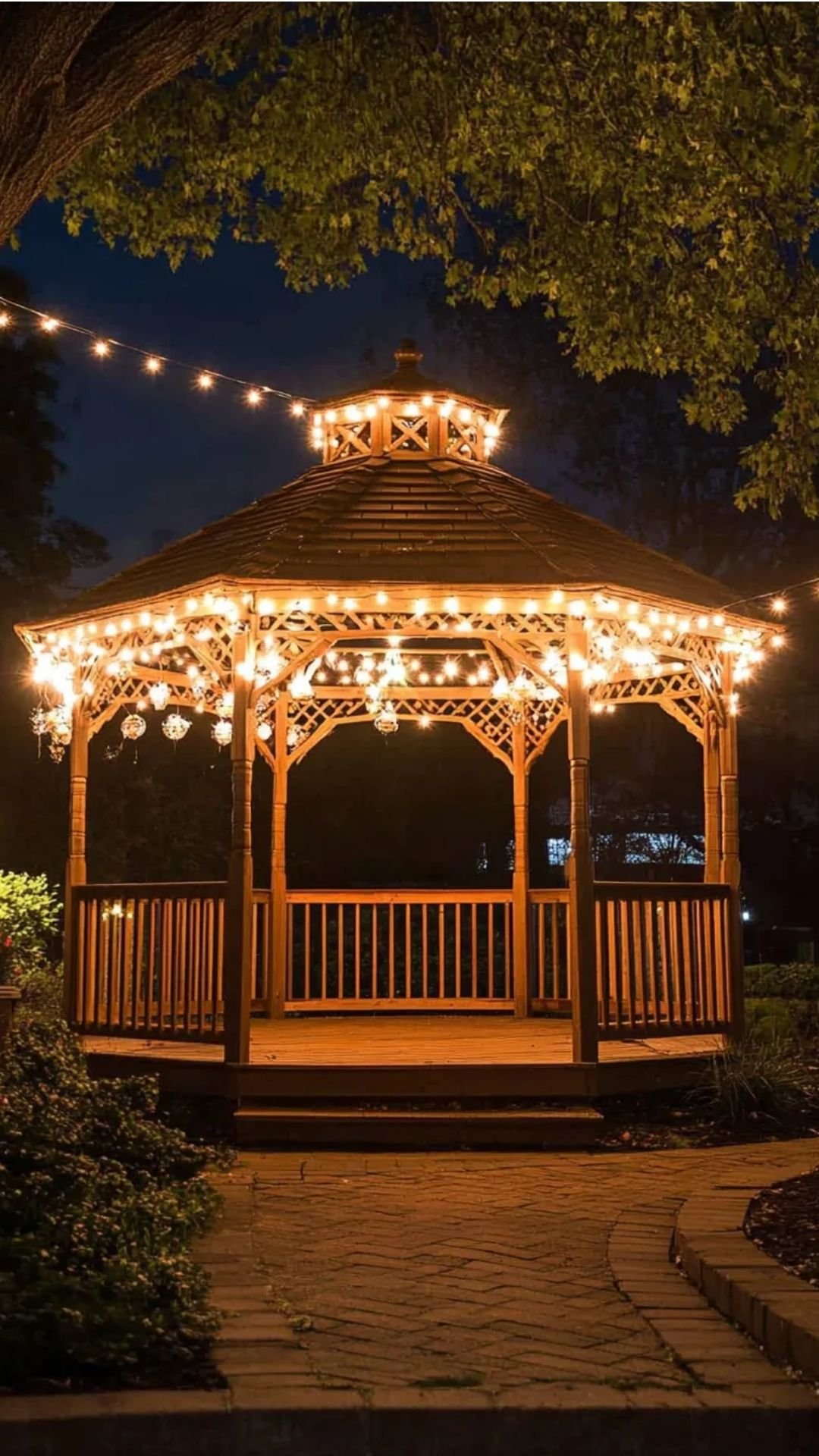
You’ve probably seen the alternative. The kind of outdoor space with warm string lights swaying overhead and a gazebo that looks like a scene from a boutique hotel. The kind that makes you linger even after the sun goes down.
You want that. Of course you do.
But it feels like a lot. Where do you even start?
Right here. A gazebo, set up thoughtfully, is the fastest path from a yard you ignore to a garden you love. These tips show you how.
What’s Actually Wrong with Your Backyard (And What a Gazebo Fixes)
The problem isn’t the lawn. It’s the absence of purpose.
Your living room works because every element in it tells you what to do. The sofa says sit. The lamp says stay. The coffee table says put your feet up. The whole room functions as an invitation.
Your backyard issues no such invitation. It’s formless. Open in a way that feels directionless rather than free.
A gazebo introduces the concept of a destination into that open space. It gives you somewhere to head to.
But only if you do more than just install the frame.
An empty gazebo on a bare lawn just moves the problem a few feet and gives it a roof.
The real transformation happens in the styling, the furnishing, the plants, the light. That’s what the rest of this guide covers.
1. Match the Gazebo Size to What Your Yard Can Actually Hold
Every backyard transformation project has a version of this story.
Someone falls in love with a grand structure online. They buy it. They install it. And their yard shrinks visually by fifty percent overnight.
Proportion matters more than size. A well-chosen smaller gazebo in the right spot does infinitely more for a space than an oversized one that crowds everything out.
Small yard: go with a compact 8-foot canopy or a simple open pergola frame that defines space without devouring it.
Medium yard: a 10-to-12-foot hardtop gazebo delivers a comfortable seating area with room to move around naturally.
Large yard: you have options. Layer a bigger structure with distinct zones — a lounge area, a dining space, a hammock spot nearby for quiet afternoons.
Also consider the architectural style of your house. A contemporary home pairs with clean metal or aluminum. A more traditional or cottage-style home calls for wood and softer lines. When the two match, everything reads as one cohesive design decision rather than a collection of random purchases.
2. Observe Your Yard Before You Decide Where to Put It
Placement decisions made in five minutes from a kitchen window tend to be regretted later at length.
The center of the lawn feels like the obvious choice. It’s also typically the hottest, most sun-exposed, most wind-swept, and most inconvenient spot to actually use.
Before you make any permanent decisions, spend an afternoon — or ideally several — in your yard at different times of day.
Track where the shade falls at 2 PM and 5 PM. Note which direction the breeze comes from. Think about how far you’re willing to walk carrying a drink.
The three factors that matter most:
Available shade. Natural shade means you can use the space on the hottest days without suffering.
Distance from the house. Close proximity dramatically increases how often you’ll actually go there. Make it feel like a natural extension of your indoor living space, not a destination that requires mental preparation.
What you’ll be looking at. Orient the seating toward the best view in your garden. Away from the fence line, the utility infrastructure, the less attractive corners.
Get placement right and you’ll find yourself outside more than you thought possible. Get it wrong and the gazebo becomes yard furniture you feel guilty about not using.
3. Put a Solid Surface Underfoot Before Anything Else
You install the gazebo. You arrange some chairs. The setup looks great in dry weather.
Then it rains.
Now your cushions are damp, your chair legs are sinking into softened ground, and your shoes are caked in mud. The beautiful scene you built is ruined for two days while things dry out.
A real floor prevents all of this.
Pea gravel is the starter move. Lay weed-suppressing fabric underneath, spread two to three inches of gravel on top. Fast, economical, excellent drainage, and the texture underfoot is genuinely pleasant.
Pavers or flagstone are the classic choice. More labor involved in laying them correctly, but the result is striking and permanent.
Composite decking is the long-term investment. It looks polished, feels warm to walk on, and requires almost no maintenance compared to natural wood.
Before any of these go in: level the ground. Religiously. An uneven base creates problems that no amount of furniture rearranging can fix.
4. Think in Three Lighting Layers Instead of One
If there is one secret to making outdoor spaces feel genuinely atmospheric rather than just okay, it’s this: layered lighting.
Not one overhead source. Three distinct layers working together.
The ambient layer. String lights strung across the gazebo canopy or looped through the rafters. Always warm white. The warm tone is what creates that golden-hour-all-evening feeling. Cool white creates a different feeling entirely — one that belongs in a conference room.
The task layer. A lantern or battery-powered lamp on the table. Enough light to see clearly for eating or reading without washing out the ambient mood.
The accent layer. Path lights around the perimeter or low-level LED strips along the base. These make the structure glow upward from the ground and signal “this is a place” from across the garden at night.
Most of these now run on solar. No wiring, no installation complexity. Just clip them in place and let sunlight handle the rest.
5. Build in Privacy So the Space Feels Like Yours
There’s a reason hotel courtyards always have walls and hedges. Because humans relax when they feel partially enclosed. That soft sense of shelter is what allows the shoulders to drop and the mind to quiet.
Without some screening, a gazebo can feel exposed. And an exposed space is one where you never quite settle in.
Outdoor curtain panels are the simplest fix. Hang weatherproof drapes on the posts, close them when you want seclusion, open them when you want the breeze. They’re inexpensive, beautiful, and transform the feel of the space instantly.
A climbing trellis with jasmine or wisteria offers a more natural, garden-integrated solution. It takes a season to fill out but what you get is a fragrant living wall that looks like it always belonged there.
Statement planters with tall ornamental grasses or bamboo in large containers create a moveable privacy screen you can adjust anytime.
Just keep at least one side open. You want to feel embraced by the space, not walled off from it.
6. Furnish It Properly — Because Outdoor Space Deserves Real Comfort
Quick audit: if someone took your outdoor seating and put it inside, would it look furnished?
If the answer is no — a single hard chair, a plastic table from a decade ago — that’s the problem.
Your gazebo is a room. It deserves room-level investment in comfort.
Get seating you actually want to spend time in: deep-cushion outdoor lounge chairs or a properly upholstered outdoor sofa with cushions thick enough to sink into. The test is simple: if you wouldn’t stay for an hour, the seat isn’t right.
Add a table of any kind. Side table, coffee table — you just need a surface. Otherwise you spend the entire time awkwardly holding things.
Then soften it: throw pillows, a warm blanket for evenings, an outdoor rug underfoot to define the space and bring everything together visually.
The difference between a gazebo you visit once and one you live in is almost always furniture.
7. Let Plants Bridge the Gap Between Structure and Garden
The quickest way to make a gazebo look like it belongs in your garden instead of on top of it? Plants.
They are the connective tissue between hard structure and living landscape. Without them, a gazebo reads as a foreign object. With them, it reads as part of the whole.
Ground level around the base: creeping herbs, flowering groundcover, or low ornamentals. Lavender is the go-to — it’s robust, fragrant, and grows in a way that naturally softens hard edges.
Mid-level around the perimeter: compact shrubs or grasses that frame the structure. They give the visual impression that the gazebo has been there for years and the garden grew up around it.
Inside: hanging baskets with trailing greenery above, pots with ferns or succulents at floor level, a small herb planter on the table for fresh snips while cooking.
Build from low to high. Layers create depth. Depth creates the feeling of abundance. And abundance is what an oasis feels like.
8. Layer the Senses, Not Just the Visuals
The difference between a space that looks good and a space that feels restorative is almost always sensory depth.
Visual design alone produces a pretty space. Sensory design produces an experience.
For sound, a compact solar water fountain nearby is transformative. The continuous gentle sound creates an auditory curtain between you and the world. Stress responses mute almost immediately.
Wind chimes with a resonant, low pitch add movement and softness without becoming irritating.
For scent, pot up fragrant herbs — rosemary, mint, lemon thyme — and keep them within reach of the seating. The breeze does the rest.
A citronella candle contributes scent, soft light, and insect repellent all at once.
For touch, vary the materials around you. The difference in texture between smooth teak, rough rattan, soft fabric, and cool stone is what makes a space feel layered and complete rather than all-one-thing.
When the space rewards all five senses, it stops being a garden feature and becomes a place your body genuinely wants to be.
9. Weatherproof It Before the Weather Has a Chance To
This is the least glamorous section of this guide. And probably the most practically important.
Build a beautiful outdoor space and then fail to protect it and you’ll spend the next eighteen months watching it slowly deteriorate in ways that feel deeply discouraging.
Mold finds the cushions. Rot reaches the wood. Rust spreads through the metal joints. The fabric starts to gap and fray.
None of this is inevitable if you stay ahead of it.
Cushions: invest in water-resistant fabric or quick-dry foam. Move them into a weatherproof storage box when storms are incoming. It takes ninety seconds.
Wood: seal or stain on a one-to-two-year cycle. A morning of work buys years of structural life.
Metal: every spring, check for rust spots and hit them early with rust-inhibiting paint before they establish themselves.
Fabric curtains and canopy panels: store them dry over winter and in advance of major storms. They’ll last indefinitely if you do.
Take care of what you built. The goal is to enjoy this space for a decade, not to rebuild it every couple of years.
10. Anchor It. Completely. The First Time.
Safety tip. The most important one.
A strong wind event does not give you a warning. It arrives, and anything that isn’t secured becomes a problem.
Canopy-style gazebos are particularly vulnerable. They act like sails. In a serious gust, they lift and travel — across your yard, over your fence, into your car, through a window.
This is not a hypothetical. It happens constantly and it is completely preventable.
Soft-top gazebos: heavy-duty ground stakes (not the ones from the box) plus sandbag weights on all four legs. Add guy ropes in areas with frequent strong winds.
Hardtop and wooden gazebos: concrete slab, poured footings, or direct bolting to an existing deck. No exceptions. No “I’ll do it properly next season.”
Anchor it on day one. Done properly. And then enjoy your oasis without that thing in the back of your mind.
One Step Is All It Takes to Begin
You don’t have to do all ten things before the weekend is over.
You just have to do one.
Hang the string lights. Roll out the outdoor rug. Plant one pot of lavender beside the structure.
One action leads to another. Then another. And before long, you have something you didn’t have before.
An outdoor space that feels worth staying in.
One that feels like yours.
Stop reading. Go start.
🔍 Yoast SEO Checklist
🔍 Focus Keyphrase: gazebo garden oasis
📌 SEO Title (< 60 chars): How to Create a Cozy Garden Oasis with Gazebo Tips
🔗 Slug (< 60 chars): cozy-garden-oasis-gazebo-tips
📝 Meta Description (< 155 chars): Transform your backyard into a cozy garden oasis with these expert gazebo tips on placement, lighting, privacy, and more. Start building your retreat today!