29+ Sectional Sofa Styling Ideas: Transform Your Living Room Today
Disclosure : This post may contain affiliate links or paid partnerships. I may earn compensation if you click a link or make a purchase, at no additional cost to you. See my disclosure for more info.
Something needs to be said out loud.
You’ve been living with a living room that doesn’t quite satisfy you. You sense it every time you walk in.
The sectional occupies the space. It’s functional. But the room as a whole? It looks like a starting point rather than a finished design.
You’ve pinned hundreds of rooms that make you sigh with envy. Spaces that feel pulled-together, warm, alive. Then you come back to yours.
The comparison is painful.
And you haven’t been able to crack the code.
Here’s what interior designers understand that most people miss entirely. The sectional isn’t the problem. Spending more isn’t the solution.
The specific choices surrounding that sectional — how it sits in the room, what you place around it, how you layer the finishing touches — are what separate a room that impresses from one that just exists.
Every one of those choices is what we’re unpacking today.
Let’s begin.
Understanding Why the Sectional Is Everything
Before any specific tips, grasp this core principle.
The sectional is the visual epicenter of your living room. Everything else in the space takes its cue from it.
From the rug beneath it to the artwork above it, every element orbits that sofa.
Arrange the sectional thoughtfully, and the room begins to compose itself.
Arrange it carelessly, and not even the most perfectly chosen throw pillows will pull things together.
Arrangement Ideas for Tricky Spaces
1. Step It Away From the Wall
Here’s the decorating error most people make and never question. Sectionals pushed against walls produce sterile, institutional-feeling rooms.
Pull yours out by 8 to 12 inches. That simple shift adds perceived depth and makes the whole room feel like it has more square footage.
2. Harness the L-Shape as a Room Divider
Your L-shaped sectional already functions as a room partition. Position the long arm between your lounge zone and another area — dining, kitchen, or entry.
No construction required. The sofa does the architectural heavy lifting.
3. Direct It at the Room’s Star
The sectional’s seating should face whatever demands the most attention — the fireplace, the screen, a spectacular window view.
Convention says face the door. But convention didn’t design your home. Your daily experience should.
4. Tilt It in Boxy Rooms
Square rooms suffer from excessive symmetry. Everything feels predictable and static.
Angling the sectional slightly off the grid introduces a sense of flow and visual interest that straight placement never achieves.
5. Nestle It Into a Corner in Open Plans
An open-concept space without defined zones can feel formless. Positioning the sectional into a corner immediately creates structure.
Add a round coffee table to complete the vignette and you’ve built a welcoming, human-scaled gathering spot inside a larger room.
Making Compact Living Rooms Work
6. Choose a Convertible Chaise Design
In spaces under 250 square feet, a sectional with a reversible chaise is worth its weight in gold. Flip the configuration whenever your needs or mood change.
In small rooms, the ability to adapt is a luxury.
7. Eliminate an Arm to Open the Space
A sectional without an arm at one end removes a visual barrier. Your eye travels farther, and the room reads as wider as a result.
Designers reach for this trick habitually, and for good reason.
8. Select a Sectional With Visible Feet
When light can pass beneath the sofa, the floor feels continuous. That unbroken visual plane creates a convincing illusion of greater floor area.
9. Tone-Match the Sofa to the Walls
A sectional that disappears into the wall reduces the visual weight in a compact room. Instead of competing for attention, it becomes part of the backdrop.
Pale taupe sofa against pale taupe walls — the room breathes.
10. Downsize the Coffee Table
A full-sized coffee table in front of a sectional in a small room is a navigational nightmare.
Nesting tables or C-tables give you the surface space you need without blocking pathways or stealing floor area.
The Styling Moves That Make It All Click
11. Upsize the Rug Significantly
Your rug must be large enough that the front legs of the entire sectional comfortably rest on it.
A small rug beneath a large sofa looks accidental — and nothing kills design credibility faster than an accidental choice.
12. Embrace the Rule of Odds With Pillows
Three pillows or five. Never symmetrical pairs.
Odd numbers feel organic and dynamic. Combine a velvet, a textured linen, and a patterned pillow in a unified color palette for a sofa that looks designed rather than decorated.
13. Soften the Chaise With a Throw
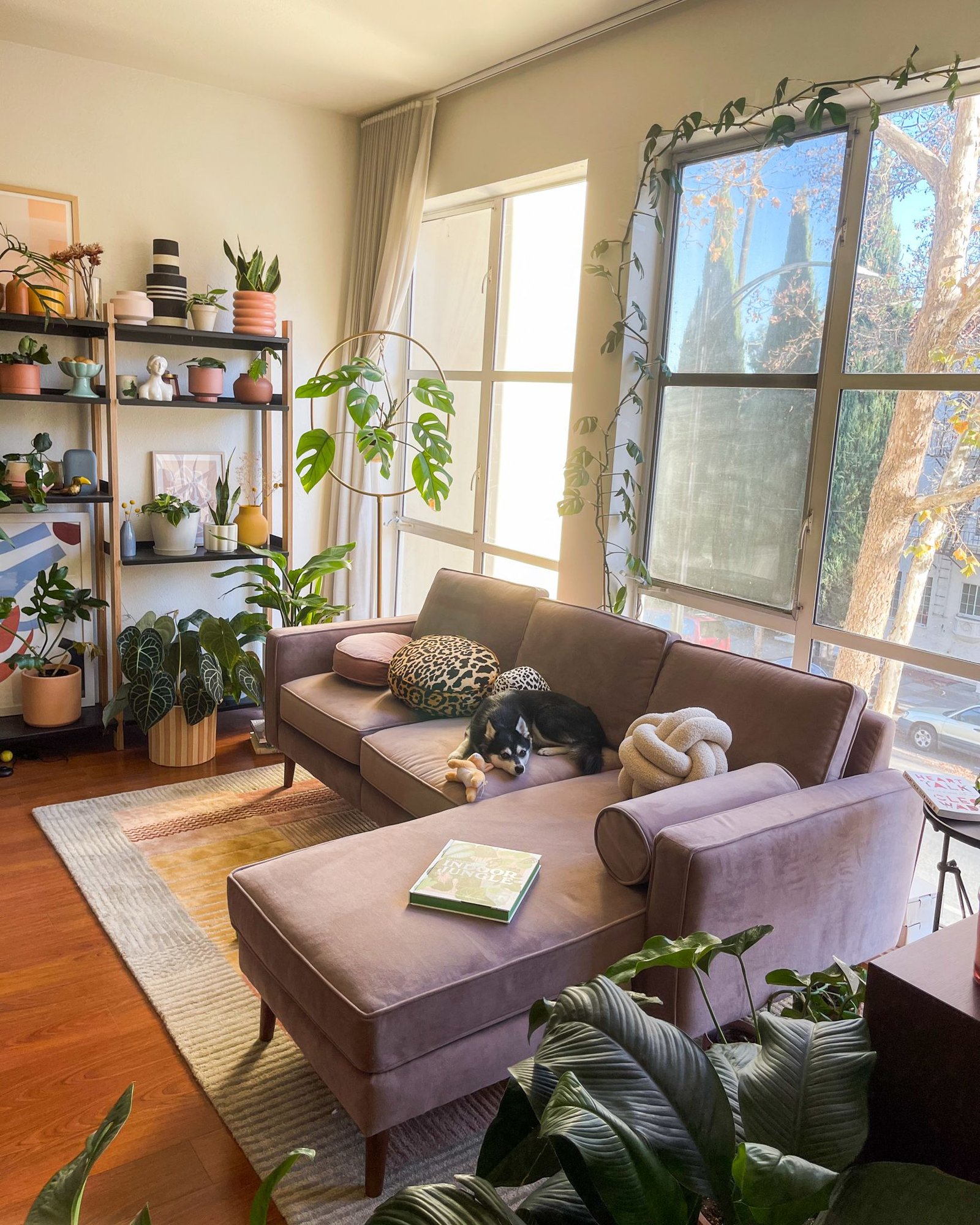
The chaise end frequently looks underdressed compared to the pillowed main section. A chunky knit or woven throw casually arranged there corrects the imbalance and adds warmth and texture.
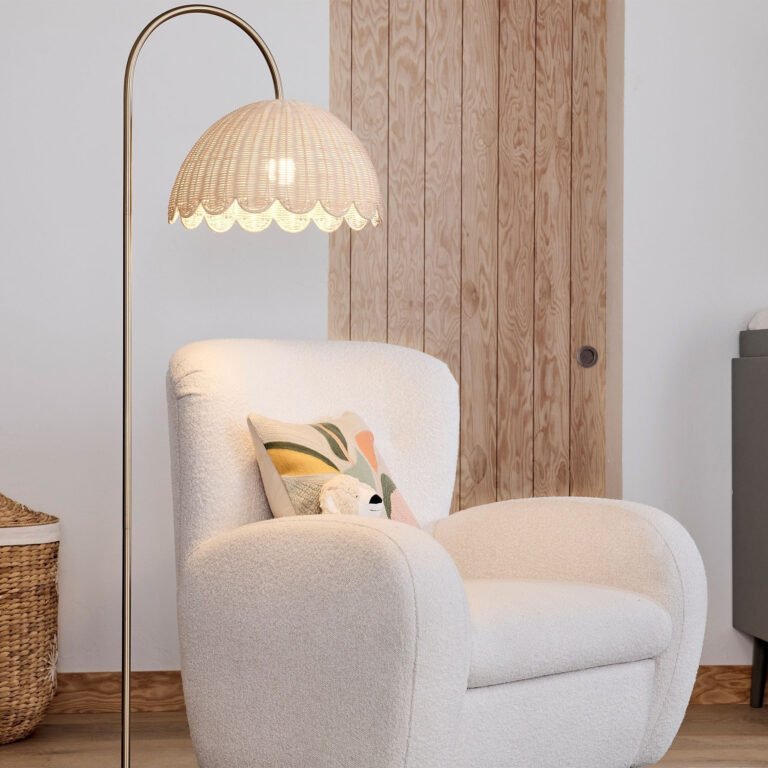
14. Light the Corner of the Sectional
The inner corner — where the two sections of the sofa meet — is the ideal spot for an arc lamp or tall sculptural fixture.
It addresses the vertical plane, provides intimate ambient light, and gives the sectional a polished backdrop.
15. Anchor Artwork to the Sofa, Not the Ceiling
Six to eight inches above the top of the sectional is where art belongs. Not halfway up the wall.
Art hung too high floats free of the furniture below. The room divides into unrelated halves.
Connect the art to the sofa and the room reads as one cohesive composition.
Colors and Fabrics That Create Rooms You’ll Always Love
16. Commit to a Rich, Deep Color
Emerald, sapphire, or deep wine — a sectional in a saturated color becomes the defining feature of the room.
Pair it with soft neutral walls and warm metal accents for a result that feels expensive and considered.
17. Put Durability First When Real Life Is Happening
This is the least glamorous tip and possibly the most important one.
Performance fabrics like Crypton or Sunbrella look identical to standard upholstery. The difference is that they’re built to survive actual daily use without showing it.
18. Pair a Pale Sofa With High-Contrast Cushions
A light sectional can absolutely survive a household with children — as long as the fabric is performance-grade underneath and you use dramatic dark pillows to anchor the look.
Linen white sofa plus charcoal or deep navy pillows equals crisp, contemporary, and confident.
19. Consider Slipcovers for Effortless Seasonal Updates
A sectional with slipcovers allows you to change the room’s mood with the seasons without buying a new sofa. Bright and light for warmer months. Dense and textured for fall and winter.
Multiple personalities. One investment. Endless refresh potential.
Room Setups for Hosting and Everyday Life
20. Complete the U With a Single Chair
Place a statement chair facing the open end of your L-shaped sectional and you instantly have a U-shaped conversation arrangement.
Every seat faces the center. Conversation becomes natural and inclusive. No one is isolated at the edge.
21. Use an Ottoman at the Open End
An ottoman where extra sofa would go is almost always the smarter choice. It works as a footrest, a casual seat, and — with a tray — a fully functional coffee table alternative.
22. Line the Back of the Sectional With a Console
A sectional that floats away from the wall can leave an awkward empty zone behind it.
A slim console table transforms that zone. Style it with lamps and a plant and you’ve given the sofa’s back edge real intention and character.
23. Mirror the Sectional With a Second Piece
If the space permits, positioning two sectional configurations across from each other with a coffee table between them creates a setup that feels grand, balanced, and ideal for entertaining.
The Details That Separate a Good Room From a Great One
24. Balance Angles With Circular Forms
A sectional’s geometry is all corners and straight lines.
Introduce a round or oval coffee table in front of it and the contrast creates balance and sophistication. It’s one of the most reliable moves in interior design.
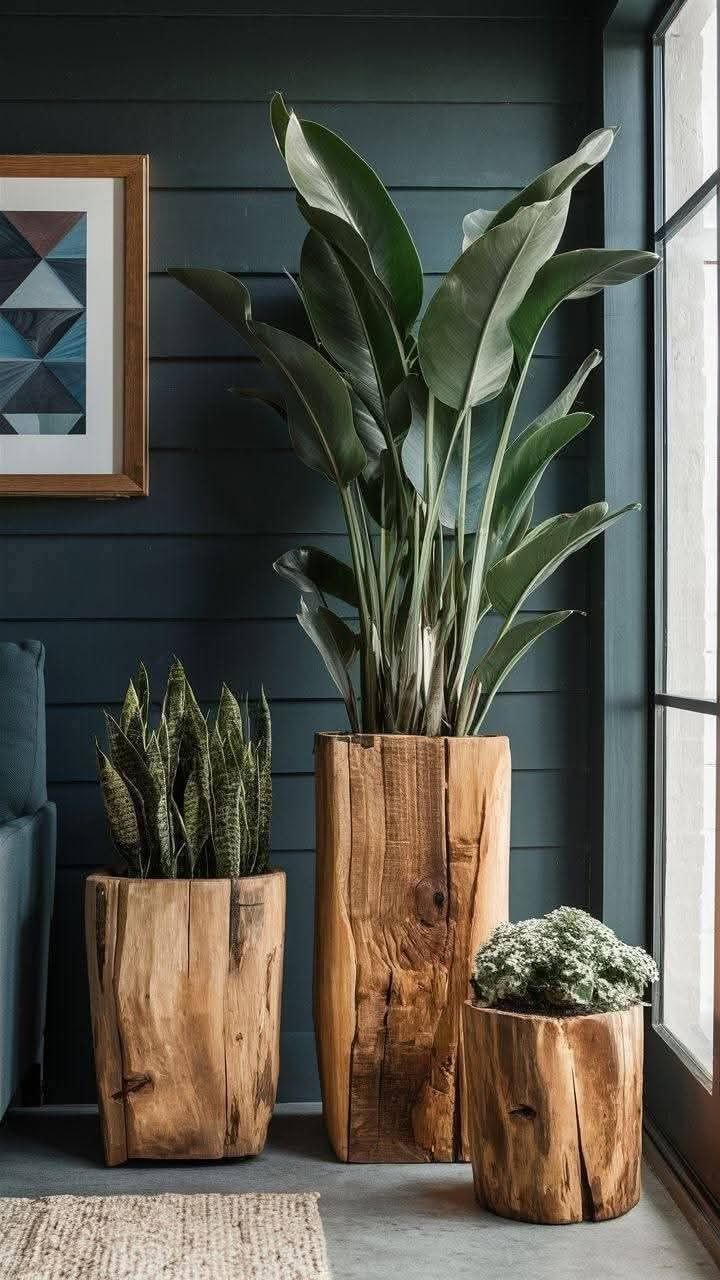
25. Introduce Living Height With a Floor Plant
A fiddle-leaf fig or birds-of-paradise positioned at one end of the sectional adds scale, softness, and life.
It fills the vertical gap left by the sofa’s low profile and brings a quality of organic presence that no furniture or accessory can replicate.
26. Use a Ledge for Flexible Wall Art
Rather than committing to permanent hanging, a picture ledge lets you experiment with art arrangement freely.
Swap pieces with the seasons, lean in new finds, adjust the composition whenever you’re inspired. The wall stays alive and interesting without a single nail hole.
27. Give the Chaise Its Own Side Table
A side table at the arm end of the sectional is obvious. A surface at the chaise end is where most people miss a trick.
A petite round table there means you always have somewhere to set a drink when you’re lying back — solving a problem you experience constantly but never thought to name.
28. Design Lighting at Three Separate Heights
One floor lamp. One table lamp behind the sofa on the console. A pendant or overhead ambient above.
Layered lighting is what separates a warm, inviting room from a flat, institutional one. A single ceiling light source, no matter how attractive, cannot achieve that quality alone.
Build the layers and the room comes alive after dark.
29. Close the Composition With a Bench
In a spacious room, a long upholstered bench set a short distance in front of the sectional gives the arrangement a defined edge.
It communicates that the space is intentional, provides natural overflow seating for gatherings, and makes the whole area feel complete rather than open-ended.
Your Next Step
You’ve just moved through a practical, comprehensive set of design ideas that address the real problems — not hypothetical ones — that make living rooms feel unfinished.
Keep this page somewhere accessible.
The next time you feel dissatisfied standing in your own living room, you’ll have a clear, organized set of strategies for understanding what’s missing and how to address it.
The distance between a room that underwhelms you and one that genuinely excites you isn’t measured in dollars.
It’s measured in decisions.
You now have the right ones.