28 Japanese-Inspired Bathroom Upgrades for a Spa-Like Home Sanctuary
Disclosure : This post may contain affiliate links or paid partnerships. I may earn compensation if you click a link or make a purchase, at no additional cost to you. See my disclosure for more info.
You make it home and you’re running on empty.
Your shoulders are tight. Your mind is still looping through work. Your phone keeps pulling you back.
You push open the bathroom door, glance around, and feel… nothing good.
Not rest. Not calm. Just a dated room with products stacked on every surface and a grout line you gave up cleaning two months ago.
Sound right?
Here’s what you may not know. Your bathroom could genuinely be the most transformative space in your home. The room that presses pause on everything the second you close the door.
That’s not wishful thinking. That’s the entire premise behind Japanese bathroom design.
Not aesthetic. Not aspirational. Functional restoration.
And you don’t need to start over from scratch, travel to Japan, or spend beyond your means.
You just need the right framework. The right choices.
Here we go.
The Philosophy That Changes Everything
First, the mindset shift that makes all the difference.
In Japanese culture, the bathroom is not a chore room. It is a place of intentional restoration.
The act of bathing cleanses the mind alongside the body. This shapes everything from the tile choice to how towels are stored.
The end result is a room that functions like a personal sanctuary.
And the practical reality? Most of these ideas are entirely achievable regardless of your bathroom’s age, size, or existing layout.
Here are the 28 concepts that can reshape what your bathroom does for you.
Structure and Layout Principles
1. Physically divide the wet and dry areas
Traditionally in Japan, the bathing zone and the dressing zone are distinct rooms. Water stays contained. The rest stays dry.
Even in a compact space, a glass panel or a slight floor elevation shift signals the transition. The result is a drier, cleaner, and remarkably more orderly space.
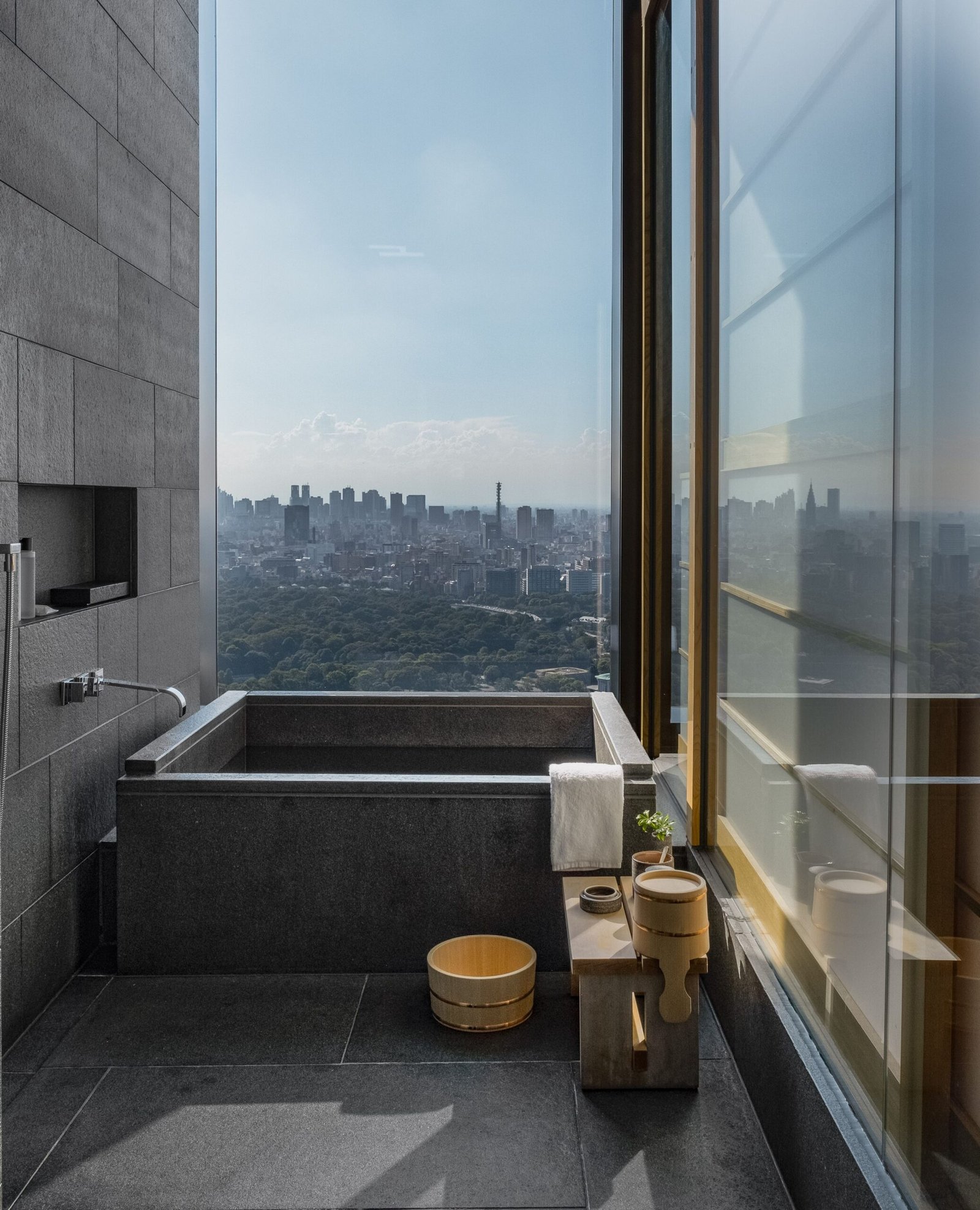
2. Position the tub as the room’s centerpiece
The bathtub in Japanese design is not an afterthought. It is the anchor point of the entire room.
Every other element defers to it.
If your layout allows, place your soaking tub where it catches the eye immediately upon entry.
3. Install a separate rinsing station beside the tub
This is perhaps the largest departure from Western bathroom culture. You rinse off completely before entering the tub.
A compact shower station with a handheld showerhead and a low wooden stool makes this possible.
The soaking water remains perfectly clean. The tradition is honored.
4. Partition the toilet from the bathing area
Even a sliding door and a simple dividing wall is enough.
Removing the toilet from the bathing zone elevates the feel of the space dramatically. It becomes less utilitarian and more genuinely restorative.
Material Choices That Shape the Mood
5. Feature hinoki cypress throughout the space
Hinoki is the quintessential material for Japanese bathroom interiors. It naturally repels water and mildew without treatment.
Its defining characteristic is the fragrance it releases under steam — a clean, forest-like warmth that instantly sets the tone.
A hinoki mat, a stool, or a tray near the tub can shift the entire atmosphere of your bathroom.
6. Use natural stone for tactile richness
Pebble tiles, river stones, or slate flooring create a grounding sensory connection underfoot.
Walking on a pebbled shower floor isn’t just visually striking. It provides a subtle daily foot massage that most people never think to include.
7. Choose matte over glossy at every turn
Polished tiles read as commercial. Matte reads as personal.
Matte finishes across tiles, fixtures, and surfaces absorb rather than reflect. The visual effect is warmer, quieter, and more inviting — which is precisely the Japanese intention.
8. Reference washi through textured wall treatments
You can’t use washi paper in a bathroom, but wall panels that share its soft, fibrous quality bring the same spirit.
It’s a subtle, layered touch. And in Japanese design, subtlety is the entire language.
Water as a Design Element
9. Install an authentic ofuro deep soaking tub
There’s simply no substitute if you want the real experience.
An ofuro sits deeper and shorter than a Western tub. You sit upright with water at shoulder level, fully submerged and fully supported.
This one upgrade has the capacity to completely reframe what bathing feels like in your home. A deep soaking tub is the essential anchor of this design philosophy.
10. Install a ceiling-mounted rain showerhead
A rain showerhead delivers water in a steady, wide sheet from directly above.
No jet pressure. No direction adjustments. Water falls the way rain does — evenly, gently, completely.
It turns rinsing off into something you genuinely look forward to.
11. Mount a flexible handheld shower on a vertical rail
A sliding rail system lets you position the wand at whatever height suits the moment.
Practical and purposeful. It reinforces the Japanese habit of washing deliberately, not just efficiently.
12. Place a small water feature for ambient sound
Moving water is central to Japanese garden philosophy. The bamboo fountain is centuries old for good reason.
A tabletop fountain near the bath or a wall-mounted trickle creates a sonic dimension of calm that nothing else in the room can replicate.
Lighting That Invites You to Stay
13. Switch to warm, adjustable lighting throughout
Fluorescent overhead lights are the single fastest way to destroy bathroom atmosphere.
Warm LED strips behind mirrors or under floating vanities do the opposite. Pair them with a dimmer and you control the entire energy of the room.
14. Choose a backlit mirror for even, flattering light
A backlit mirror distributes light evenly without harsh shadows or glare.
The result is a soft luminous quality that makes the entire room feel intentional and calm.
15. Bring in lantern-style lights or open flame
Japanese paper lantern-style pendants or a row of candle holders along the tub rim introduce a warmth that electric fixtures simply cannot match.
Every wellness space in the world uses candlelight deliberately. Your nervous system responds to flickering warmth as a cue to finally relax.
The Discipline of Minimalism
16. Keep everything stored, nothing displayed unnecessarily
An exposed shampoo bottle, a cluttered counter, a crowded windowsill — each one chips away at calm.
Floating vanities with soft-close drawers, recessed cabinets, and tiled niches in the shower give everything a home out of sight.
A Japanese bathroom appears effortlessly uncluttered because it is systematically uncluttered.
17. Reduce your color palette ruthlessly
White. Warm grey. Warm beige. Raw wood.
These are your only colors. No bold accents. No printed textiles.
Strict tonal restraint is the mechanism that creates the sense of space, peace, and visual silence that Japanese interiors are known for.
18. Display one considered object in meaningful space
A carefully chosen ceramic object. One elegant soap dish. A single white flower.
Japanese aesthetics are governed by “ma” — the significance of negative space. Emptiness is not absence. It is considered presence.
19. Standardize your towels in one neutral shade
A mix of towel colors signals disorder even in an otherwise clean space.
One color, one weight, neatly folded or rolled on an open shelf. A small discipline with a visually large payoff.
Bringing the Natural World Indoors
20. Add a humidity-thriving plant to the space
Ferns, peace lily, pothos, or bamboo — these varieties flourish where others wilt.
A single green plant positioned near the tub brings an organic, living element into the room. This is what the Japanese call “shizen” — effortless, unforced naturalness.
21. Place a bamboo tray over the soaking tub
A bamboo tray spanning the tub holds tea, a book, or a candle.
The object matters less than the act. A tray creates a container for stillness. Permission to stop for longer than necessary.
22. Give your eyes a natural view to rest on
If a window exists, open it up with frosted glass rather than heavy curtains. Natural light is a material in its own right.
Without a window, a framed landscape photograph offers the eyes a place to soften and settle.
Your gaze belongs somewhere restful when your body is at rest.
Sensory Finishing Touches
23. Install a heated towel rail
A warm towel waiting for you after a soak is one of the most straightforwardly luxurious things you can add to a bathroom.
A wall-mounted heated towel rail is accessible, simple to install, and makes every single bath feel like it cost significantly more than it did.
24. Use natural shower botanicals
Eucalyptus or cedar bundles tied near the showerhead release their essential oils in the steam.
No synthetic scent products. No spray bottles. Just a plant doing what it was made to do.
25. Address the cold floor problem
Cold tiles on bare feet at dawn are a daily jolt that disrupts the entire atmosphere of a morning routine.
Underfloor heating is the premium solution. For a more immediate fix, a quality wooden bath mat positioned thoughtfully solves it elegantly.
26. Curate the acoustic environment
A waterproof Bluetooth speaker set to ambient rainfall, traditional flute, or gentle white noise creates a sound environment that supports rather than fights relaxation.
Most bathroom renovations think entirely in visual terms. Acoustic design is the most underrated element of the entire experience.
27. Choose one understated, consistent scent
Not fragrance products. Not air fresheners.
A small hinoki wood chip in a ceramic bowl. A single incense stick before bathing. A drop of essential oil in warm water.
“Kodo” — Japan’s art of fragrance — teaches that scent is a path to mindful presence, not a room freshener.
28. Hang a cotton robe or yukata within reach
The ritual doesn’t end when the water drains.
A lightweight cotton or waffle-weave robe on a simple wooden hook extends the warmth of the soak seamlessly into what comes after.
From water to warmth without a break in the experience.
The Deeper Purpose Behind All of This
When you zoom out, this is not a decorating exercise.
It’s a commitment to building a room that works on your behalf. Every day.
A place where nobody needs anything from you. Where the volume of your life drops to zero for twenty minutes. Where your body actually remembers what it feels like to be at rest.
Japanese culture has known this for a long time. The bath is not maintenance. It is a necessity.
And you deserve a bathroom that honors that.
Start with one idea from this list. Perhaps just clearing the surfaces. Perhaps a bamboo mat and a plant.
Let each choice be made with intention.
Because the philosophy behind this isn’t about aesthetics. It’s about the belief that your daily moments of recovery deserve to be designed for.
And then following through on that belief, one deliberate choice at a time.
Start today.