30+ Farmhouse Kitchen Ideas That Actually Work in Real Life
Disclosure : This post may contain affiliate links or paid partnerships. I may earn compensation if you click a link or make a purchase, at no additional cost to you. See my disclosure for more info.
Forget the fantasy version.
You know the one — the magazine spread where nothing’s out of place and somehow every surface looks both rustic and immaculate.
Real farmhouse kitchens don’t look like that. The best ones look like someone lives in them — because they do.
That lived-in quality is exactly what makes them magnetic. And it’s completely achievable without a renovation or a stylist.
Here are over 30 practical, honest ideas for getting there.
Fabric and Softness: How Textiles Reshape a Kitchen’s Feel
1. Hang simple linen curtains and leave them mostly open.
linen curtains in an oatmeal or unbleached tone do two things simultaneously: they soften the window frame and they let natural light pour into the room. It’s the kind of change that’s hard to explain until you see it.
2. Drop a worn-style runner rug on the work floor.
Between the stove and the sink. Along the island. Wherever you stand and work. A faded-pattern runner rug on hard floors is one of those upgrades that improves both how the kitchen looks and how it feels to be in it.
3. Replace disposable napkins with cloth.
Fold cloth ones into a basket and leave it on the counter. They’re washable, they look better than paper rolls, and they quietly communicate that meals here are worth doing properly.
Easy Wins: Small Changes That Punch Above Their Weight
4. Bring in one or two plants — maximum.
Farmhouse style isn’t a jungle aesthetic. One well-placed herb or trailing vine does the job. More than that starts to compete with the rest of the room. Edit ruthlessly.
5. Stack cutting boards of different sizes along the backsplash.
Mixed wood tones. Different shapes. Cutting boards are the rare piece of kitchen decor that’s completely honest about what it is — and that honesty is exactly what makes them work so well in a farmhouse kitchen.
6. Give the trash a place to disappear.
A pull-out cabinet for the bin removes one of the kitchen’s biggest ongoing visual problems. Clean sight lines aren’t sterile if the rest of the room has texture and warmth.
7. Put the cast iron skillet out where it can be seen.
On the burner. On a hook. On the stovetop with a lid beside it. A cast iron skillet is more authentically farmhouse than almost any decorative object you could buy. And it cooks better, too.
8. Place a wooden step stool in a corner you can see from the main work area.
It holds plants. It holds small children. It holds you when the top shelf needs attention. A wooden step stool belongs in a farmhouse kitchen because it does real work and looks good doing it.
Foundational Changes: The Pieces That Define the Whole Room
9. Install a proper apron-front farmhouse sink.
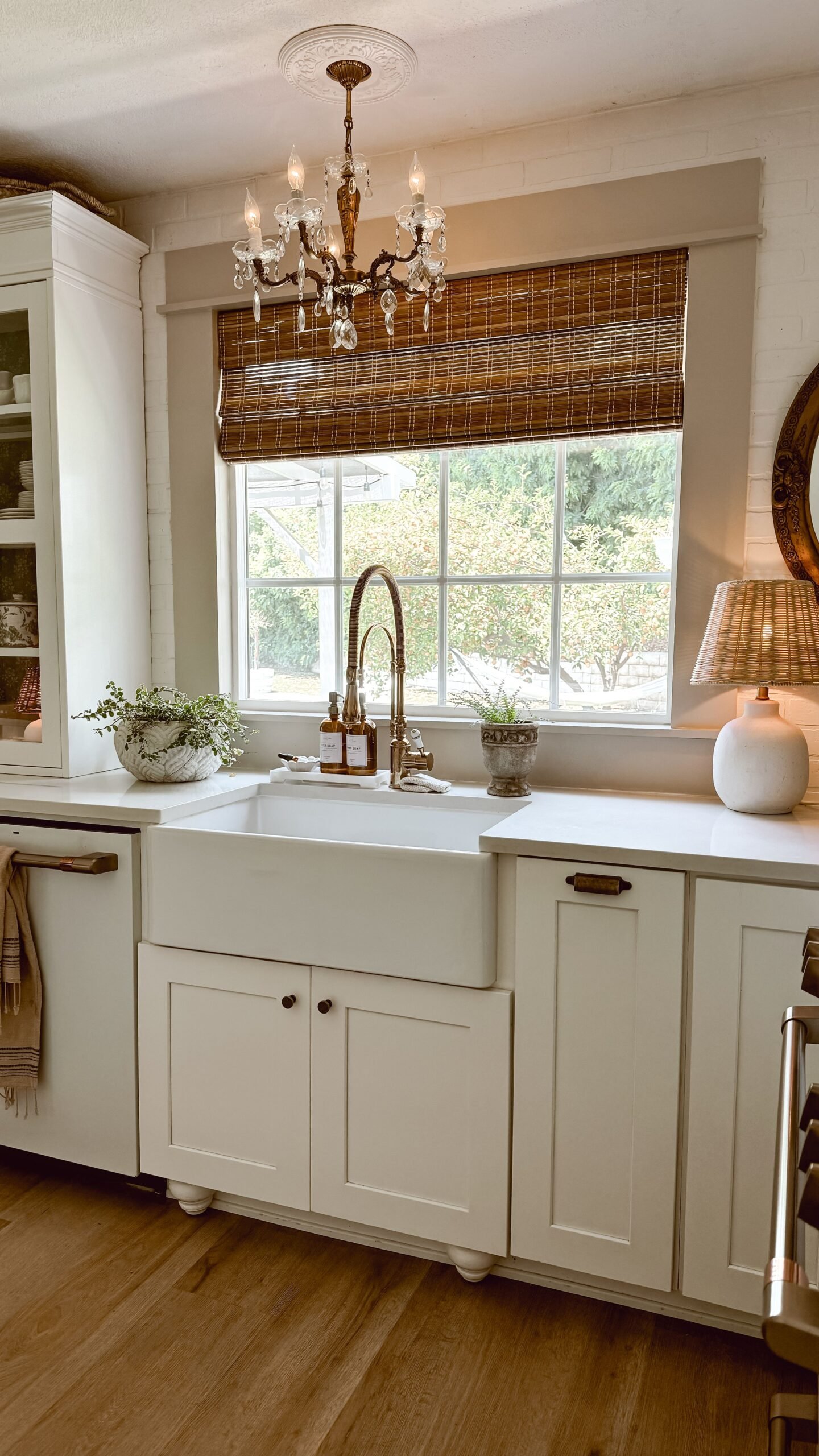
A deep apron-front farmhouse sink in white fireclay changes everything downstream. The sink is the kitchen’s anchor, and this one announces a point of view the moment you walk in the door.
10. Go warm with the cabinet color.
Not stark white — cream. Antique white. The tone of old painted wood. Warm cabinet colors make the room feel like it has been loved for decades, even if it’s brand new.
11. Add butcher block to at least one section of counter.
The island top is the most common choice, and for good reason. Walnut or maple brings warmth that stone and laminate simply don’t. It nicks and seasons over time, and that character is a feature, not a flaw.
12. Face the island with beadboard panels.
A single afternoon of work and a coat of paint. The vertical texture of beadboard is one of the cleanest signals in the farmhouse vocabulary, and it costs almost nothing to add.
13. Tile the backsplash in subway tile — with a twist.
The shape is traditional. The color can be anything but standard white. A soft sage or muted clay backsplash says you understood the reference and then made it your own.
Island Ideas: Getting Your Kitchen’s Centerpiece Right
14. Source an island that feels like furniture.
If it looks like it could stand alone in a room and hold its own, it’s right. A furniture-style island with turned legs and an antiqued finish will always feel more farmhouse than one that looks like it was ordered alongside the base cabinets.
15. Leave signs of real use on the island surface.
A cutting board standing upright. A jar of wooden spoons. A linen towel. Not arranged for a photo. Left because they belong there. That’s the look.
16. Use varied, non-matching stools.
A set of matched stools is fine. A collection that grew over time — different legs, different upholstery, different materials — tells a better story and looks more genuinely lived in.
Hardware and Light: The Details That Pull It Together
17. Change the cabinet hardware to something darker and more deliberate.
Bin pulls. Bin pulls. Cup pulls. Knobs in matte black or oil-rubbed bronze. The hardware swap is the single most cost-effective upgrade you can make to a set of existing cabinets.
18. Hang a dark metal pendant light.
Steel or black iron, matte finish, substantial scale. A metal pendant light over the island or sink grounds the room and adds the kind of industrial-edge contrast that farmhouse style has always used to avoid going too soft.
19. Replace the standard faucet with a bridge style.
The visual bridge between two separate handles is a classic detail that reads as intentional. A bridge-style model sets a kitchen apart from one where the fixtures were never really thought about.
20. Add a row of hooks under the upper cabinets.
Iron or brass. For mugs, towels, and anything that benefits from being right there when you need it. Hooks are the farmhouse answer to the junk drawer — they make access visible and keep surfaces clear.
Keeping Things Tidy Without Losing the Warmth
21. Rack your everyday dishes on the wall.
A mounted plate rack with white ironstone or earthy stoneware is both functional and atmospheric. The dishes you actually use are often better-looking than anything you’d buy just for show.
22. Use woven baskets to contain countertop chaos.
Bread. Fruit. The random items that collect near the wall. A woven basket makes the contained version look better than the scattered version — which is the most you can ask from any organizational tool.
23. Put up a pegboard for cookware.
Wooden, painted to blend with the wall, fitted with hooks at arm’s reach. The pots you use daily are displayed like the tools they are. Function never looked so much like decor.
24. Transfer pantry goods into glass jars.
Flour, oats, sugar, rice in coordinated glass jars with clean labels. The shelf goes from looking like a pantry to looking like a food shop. Small shift. Big visual payoff.
Walls That Work: Adding Texture and Depth
25. Lose a few upper cabinets in favor of open shelving.
Open shelves make a kitchen feel lighter and give the room personality. Style them sparsely — a few plates, a plant, a book. Space on a shelf is design, not emptiness.
26. Add shiplap to the wall behind the stove.
Painted to sit quietly in the room rather than stand out from it. Shiplap used this way adds texture without noise. It’s the architectural equivalent of a well-placed piece of furniture — you notice it, but it doesn’t compete.
27. Put beams on the ceiling.
Real reclaimed wood is worth it if the budget allows. Well-crafted faux beams are worth it if it doesn’t. Either way, beams turn a flat ceiling into a feature that makes the room feel older, deeper, and more finished.
28. Board-and-batten the lower wall in the eating area.
Floor to chair-rail height in a soft neutral. It’s a subtle detail with a pronounced effect on how the room feels — structured but not stiff, classic but not formal.
29. Paint one wall a deeper earthy tone.
Muted sage. Warm clay. Washed slate. A single warm wall in a mostly white kitchen adds dimension without disrupting the color story. It makes the white walls look warmer by contrast.
The Eat-In Kitchen: Making the Table Feel Like Part of the Room
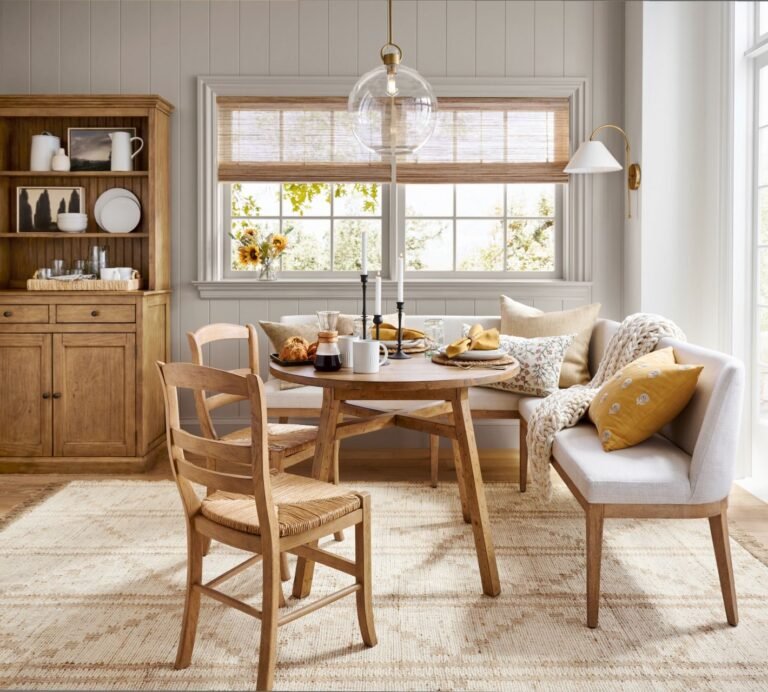
30. Build a banquette into a corner or nook.
Cushions, a few pillows, a solid table. It becomes the kitchen’s best seat — the one people drift toward in the morning and don’t leave until they have to.
31. Hang a round farmhouse-style clock over the dining area.
Something with weight and age to it. A round enamel wall clock fills the wall and sets the mood: unhurried, domestic, home.
32. Put a wooden tray on the table and never take it off.
A candle. Seasoning. A small plant or branch in a jar. The wooden tray stays there year-round, swapping out details with the season. It makes the table feel permanent and welcoming.
The Only Rule: Make It Yours
A farmhouse kitchen that works isn’t one that followed all the rules.
It’s one that followed some of them, broke a few others, and ended up looking like the person who lives there actually made the choices.
That’s the whole point of a style rooted in function and honesty. There’s no wrong way to apply it as long as you stay true to what you actually love.
Pick what resonates. Leave what doesn’t. Come back when you’re ready for more.
The kitchen you want is closer than it looks — it just takes a few honest moves to get there.